
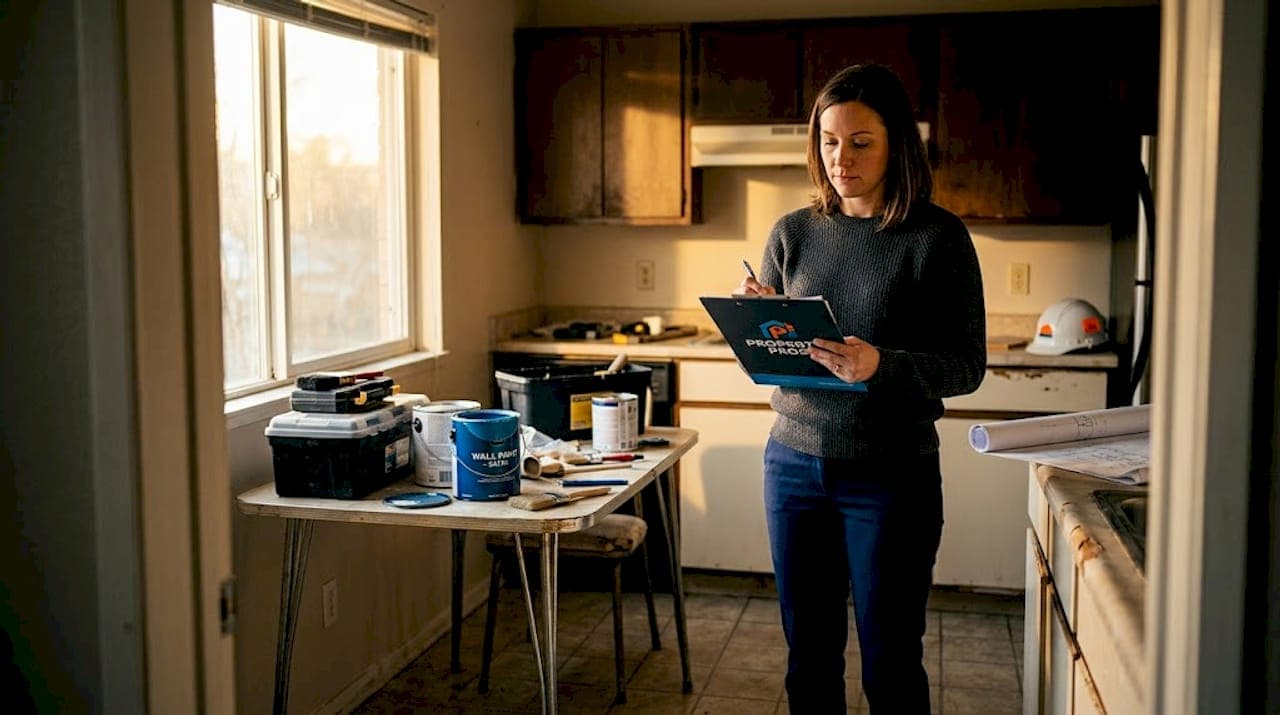
Most property owners assume apartment restoration means a full gut renovation. That assumption leads to overspending, unnecessary delays, and decisions made without a clear picture of what the work actually involves. Understanding how apartment restoration works gives you a strategic advantage: you can scope projects accurately, budget with confidence, and keep your units turning over faster. This guide breaks down every phase of the apartment renovation process, from the initial walkthrough to final inspection, along with cost benchmarks and best practices that matter specifically to property professionals.
Table of Contents
- Key takeaways
- How apartment restoration works: the full picture
- Steps for apartment restoration, start to finish
- Cost considerations for apartment restoration
- Best practices for managing apartment restoration
- Common challenges and how to handle them
- What I have learned after years of restoration work
- Ready to restore your property the right way?
- FAQ
Key takeaways
| Point | Details |
|---|---|
| Restoration differs from renovation | Restoration focuses on repairing and refreshing existing surfaces rather than replacing everything from scratch. |
| Assessment drives every decision | A thorough photo-documented walkthrough creates the scope of work that prevents costly surprises later. |
| Budget for the unexpected | Industry experts recommend a 10 to 15 percent contingency fund on every restoration project. |
| Phased scheduling protects tenants | Working section by section reduces disruption in occupied buildings and maintains access throughout. |
| Coordination is the real bottleneck | Misaligned schedules between contractors, tenants, and building management cause more delays than the actual work. |
How apartment restoration works: the full picture
What is apartment restoration, exactly? Many property professionals use the terms restoration, renovation, and remodeling interchangeably, but they describe fundamentally different scopes of work.
Restoration focuses on returning surfaces and systems to a functional, attractive condition without changing the unit's layout or structure. Renovation typically involves upgrading or replacing components. Remodeling changes the physical structure of a space. For most property managers running make-ready operations or addressing wear and tear between tenancies, restoration is the right category and often the most cost-efficient path.
Common triggers for apartment restoration include:
- Water damage from leaks, floods, or HVAC condensation
- Surface deterioration from years of normal tenant use
- Pre-leasing upgrades to increase market rent or appeal
- Post-casualty repairs after fire, smoke, or vandalism
- Compliance requirements related to habitability or safety codes
The objectives are equally varied. You might be restoring an apartment to improve appearance, meet safety standards, satisfy an HOA board, or simply cut the days a unit sits vacant. Knowing your primary objective upfront shapes every decision that follows.
Steps for apartment restoration, start to finish
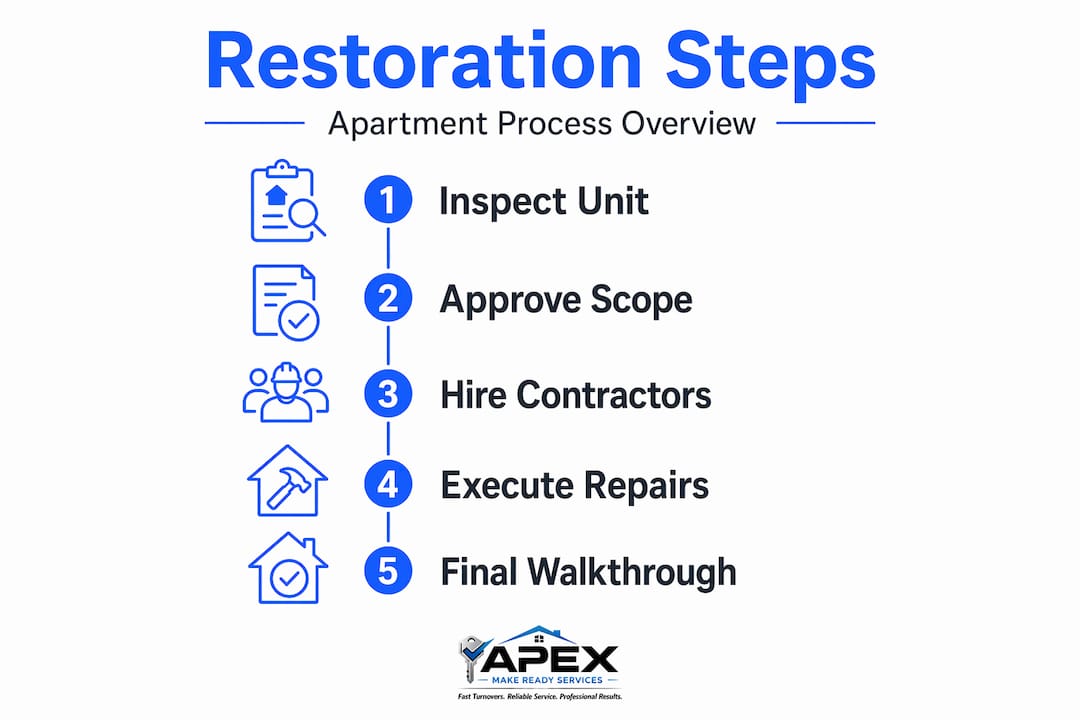
Understanding the steps for apartment restoration prevents the most common property management mistake: starting work before the scope is fully defined.
-
Initial property assessment. Every restoration starts with a detailed walkthrough. Photo documentation, measurement, and damage identification create the precise work scope that supports accurate pricing and board or stakeholder approvals. Skipping this step is the single fastest way to blow a budget.
-
Scope of work and proposal preparation. Once the assessment is complete, a line-item proposal spells out exactly what will be done, what materials will be used, and what it will cost. This document protects both parties and eliminates scope creep.
-
Permitting and legal agreements. Depending on the work involved, permits may be required. More importantly, alteration agreements specifying work hours, insurance, and debris management should be in place before a single tool is unpacked. Missing this step is a primary cause of stalled projects.
-
Scheduling and phasing. For occupied buildings, scheduling is not optional logistics. It is part of the actual restoration plan. Work should be phased to maintain building access, and noisy tasks should be scheduled outside peak occupancy hours.
-
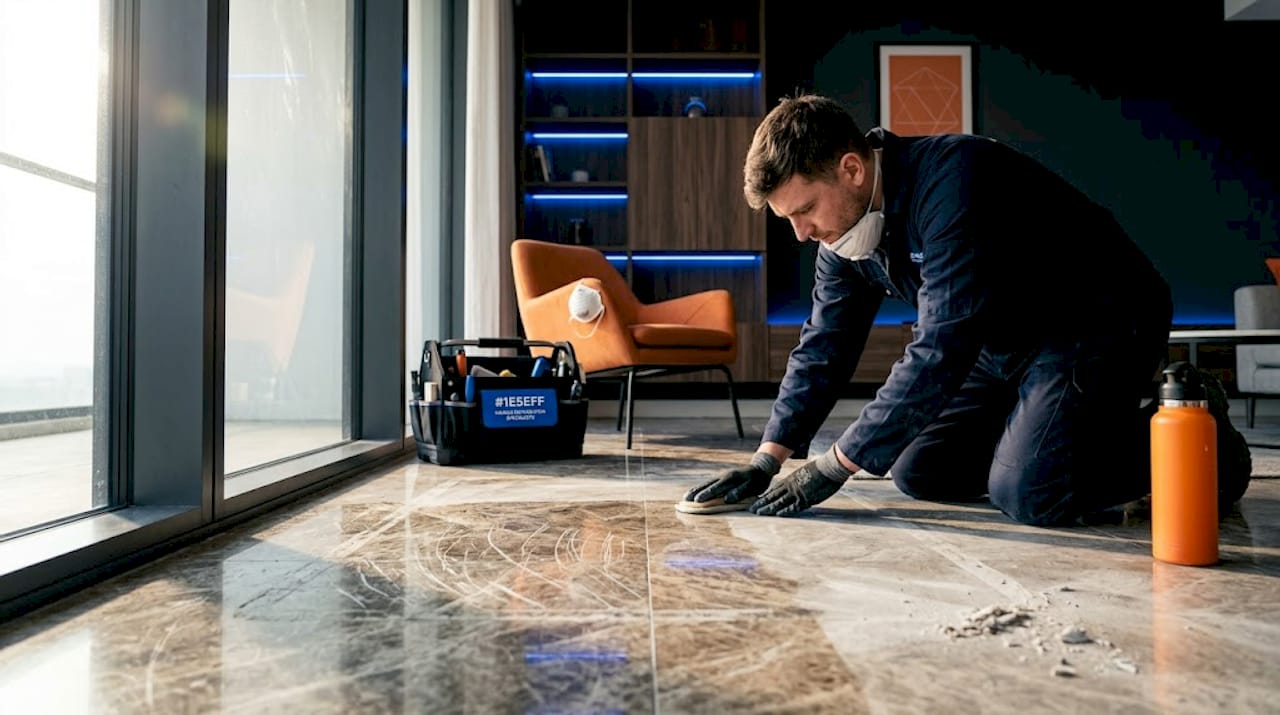
Surface restoration execution. This is where the hands-on work happens. Restoring natural stone, hardwood, and tile floors onsite avoids the lead times and costs of full replacement. Walls, countertops, and exterior surfaces follow a similar logic: repair and refinish before you replace.
-
Final inspection and documentation. A post-work walkthrough confirms everything on the scope was completed to standard. Documentation at this stage matters for lease records, warranty tracking, and future project planning.
-
Maintenance planning. Restoration work has a longer useful life when followed by a clear maintenance schedule. Note what was done, what products were used, and when surfaces will need attention again.
Pro Tip: Get the scope of work approved in writing before scheduling any contractor. Early alignment between architects, contractors, and property management reduces mid-project changes that derail timelines and inflate costs.
Cost considerations for apartment restoration
Budgeting for apartment restoration trips up property managers more than any other part of the process. The numbers vary widely by surface type, condition, and method.
| Surface type | Restoration cost (per sq ft) | Full replacement cost (per sq ft) |
|---|---|---|
| Stone and marble | $10 to $20 | $40 to $100+ |
| Concrete floors | $2 to $7 | $15 to $30 |
| Hardwood floors | $3 to $8 | $12 to $25 |
| Tile surfaces | $4 to $10 | $20 to $50 |
Those numbers make the case for restoration clearly. Stone and marble restoration costs $10 to $20 per square foot, compared to full replacement at several times that figure. The savings multiply quickly across a multi-unit complex.
What the numbers don't show is the cost of surprises. Budgeting a 10 to 15 percent contingency for unforeseen structural or system repairs is a standard industry recommendation for multi-unit restoration work. That contingency is not pessimism. It is accurate planning.
Hidden costs that commonly surface mid-project include subflooring damage found under existing flooring, outdated wiring or plumbing exposed during surface work, mold remediation triggered by moisture found during demo, and code compliance upgrades required before an inspector will sign off.
Pro Tip: For properties with multiple units in restoration cycles, volume scheduling with priority booking across several units at once can reduce per-unit costs noticeably. Negotiate this with your contractor before the first unit begins.
The phased approach also has a budget benefit beyond resident relations. By spreading restoration across a defined timeline rather than doing everything at once, you can allocate capital across fiscal periods while keeping units generating revenue during the work.
Best practices for managing apartment restoration
Good project management during an apartment restoration is the difference between a property that comes back better and one that creates new problems. Property managers with appliance maintenance responsibilities already understand the coordination demands this creates, and coordinating maintenance and restoration work at the building level requires the same kind of systematic thinking.
Key practices that separate smooth projects from chaotic ones:
- Communicate early and clearly with tenants. Give written notice of start dates, daily work hours, and which areas will be affected. Residents who feel informed are significantly less likely to file complaints.
- Use dust containment actively. Dust containment systems with HEPA filters and scheduling noisy tasks at off-peak hours are standard practice in occupied multifamily restoration. They protect both residents and your surfaces.
- Track progress against the scope document. Every completed line item should be signed off. Changes to scope need written approval before work continues.
- Verify insurance and licensing for every contractor. This protects you from liability if a worker is injured or if work causes damage to adjacent units.
- Document the finished work thoroughly. Photos tied to the move-in report create a baseline that resolves disputes at the next turnover.
Post-restoration, schedule a 30-day follow-up walkthrough. Surface treatments and refinishes need time to cure, and catching any issues within the first month is almost always faster and cheaper than addressing them after a new tenant has moved in.
Common challenges and how to handle them
Even well-planned restorations run into problems. The key is knowing which problems are common so you can prepare for them rather than react to them.
Unexpected structural issues are the most frequent disruption. Structural damage or mechanical system failures emerge frequently during restoration and require flexible project management and a funded contingency to resolve without derailing the schedule.
Tenant belongings and partial occupancy during work create friction that no amount of planning fully eliminates. Set clear rules in writing about access, storage, and what tenants are responsible for moving before work begins.
Permitting delays hit hardest in regulated urban environments. Submit applications early, build buffer time into your schedule, and have your contractor confirm exactly what is required before committing to a completion date.
Budget overruns typically trace back to scope changes requested mid-project. Every change order should go through a written approval process, no matter how small the adjustment seems at the time.
Pro Tip: Treating make-ready as an assembly line, with day-one removal of tenant items and parallel trade scheduling, can achieve 2 to 3 day unit turnaround times. Apply this thinking to your restoration sequencing and you will cut idle time significantly.
Communicate with tenants throughout, not just at the start. A brief weekly update takes minutes and prevents the kind of escalating frustration that turns a manageable project into a formal complaint.
What I have learned after years of restoration work
I have watched property managers spend twice what they needed to on apartment restoration because no one defined the scope before the first contractor showed up. The units were not in worse shape than average. The problem was the absence of a plan that all parties agreed on before work began.
The biggest shift I have seen is when property managers start treating the restoration workflow as a repeatable operational system rather than a one-off crisis response. When you have a defined assessment process, a standard proposal format, and a consistent contractor relationship, the entire cycle gets faster and cheaper. Not because the work changes, but because the coordination does.
What most guides on how to restore an apartment miss entirely is the compliance layer. Alteration agreements, permit timelines, and HOA approval processes are not formalities. They are the actual critical path on many projects. Getting those right early is more valuable than any surface technique.
My honest take: phased, resident-friendly scheduling is not the soft option. It is the smarter one. Units that stay partially occupied during restoration generate revenue. Units that sit empty while you wait for a full gut to finish do not. The math is straightforward once you run it.
— David
Ready to restore your property the right way?
If you manage apartment communities or rental properties in San Antonio, the restoration process does not have to be a source of stress or budget surprises. Apexmakereadyservices specializes in exactly this work, from single-unit make-readies to full property restoration across entire complexes.
Whether you need painting, drywall, flooring, plumbing, HVAC, or complete unit turnovers, Apexmakereadyservices handles it all under one roof. Priority scheduling is available for multi-unit clients, and volume pricing makes managing multiple restoration projects at once far more predictable. Check out the full range of available services to find the right fit for your property, or reach out directly to get a detailed proposal tailored to your specific restoration scope.
FAQ
What is apartment restoration exactly?
Apartment restoration is the process of repairing and refinishing existing surfaces and systems in a unit to return it to rentable or improved condition. It differs from remodeling because it focuses on restoring rather than restructuring.
How long does a typical apartment restoration take?
Timeline depends on the scope, but surface restoration in a single unit can often be completed in 2 to 5 days. Larger projects involving multiple systems or units benefit from phased scheduling to keep the work moving without extended downtime.
How much should I budget for apartment restoration?
Costs vary by surface and method, but restoration is consistently cheaper than full replacement. Concrete floors restore for $2 to $7 per square foot versus $15 to $30 for replacement. Always add a 10 to 15 percent contingency to your baseline budget.
Can restoration work be done in occupied apartments?
Yes, with the right planning. Phased restoration executed section by section, combined with dust containment and off-peak scheduling, allows work to proceed in occupied buildings while maintaining resident access and minimizing disruption.
What are the most common mistakes in the apartment renovation process?
Starting work before the scope is agreed upon in writing and skipping the permitting and alteration agreement steps are the two most common causes of delays, budget overruns, and disputes in apartment restoration projects.